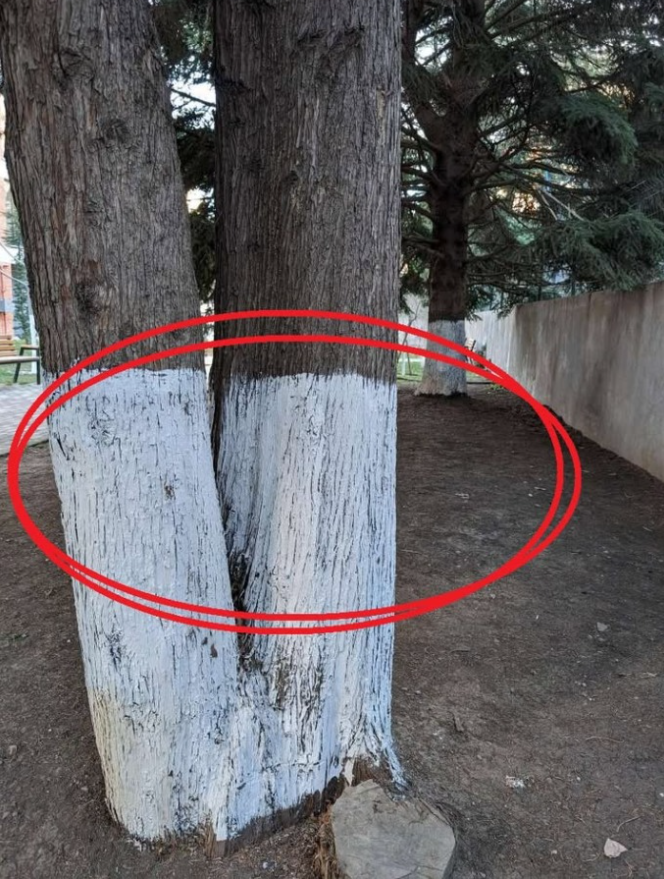
Bleaching acts as a natural barrier . By reflecting light, it reduces temperature fluctuations and protects the bark from unfavorable weather conditions. This technique is especially useful for young fruit trees, whose bark is still delicate and sensitive.
Unwanted insect repellent
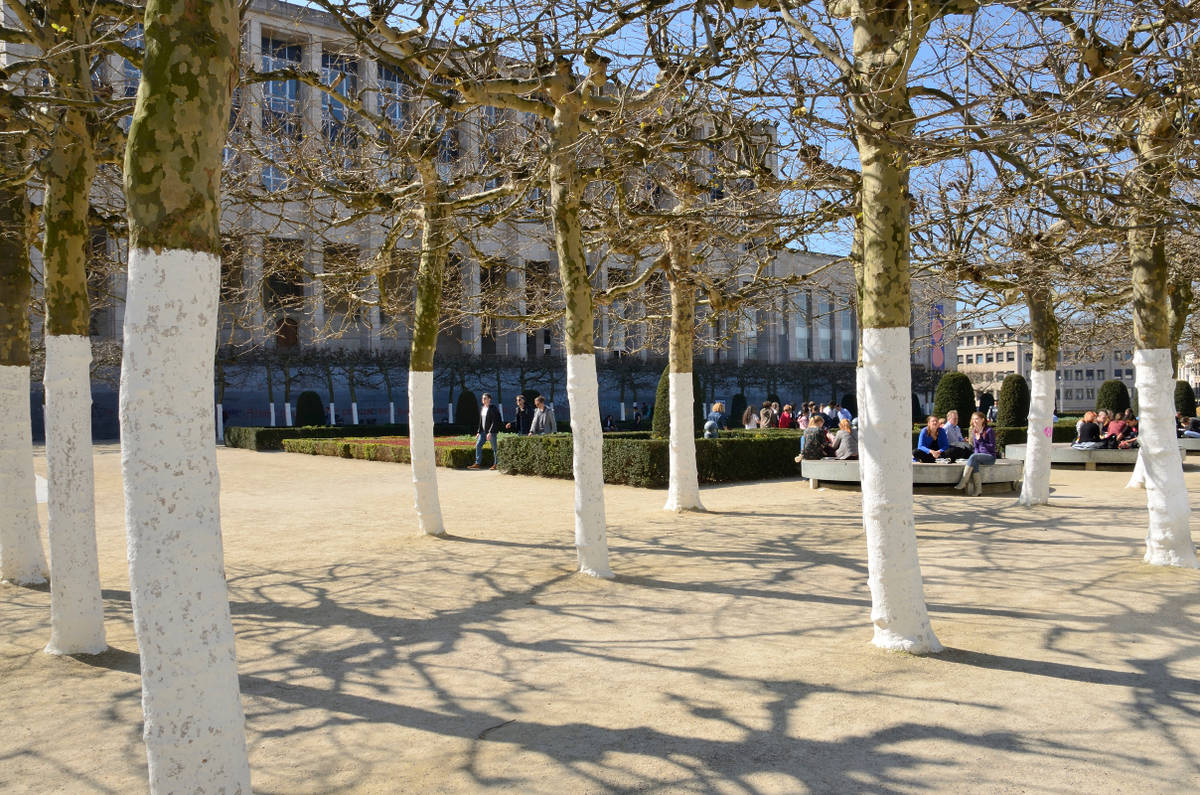
Weevils, bark beetles, ants… For these pests, the tree trunk is a gateway to a food source. Applying a white coating creates both a physical and visual barrier. The result: intruders are disoriented, slowed, and even deterred.
Some recipes include natural ingredients like neem oil or diatomaceous earth , known for their repellent properties. This is an eco-friendly approach to protecting trees without the use of pesticides or harsh chemicals.
Preventing the development of fungal diseases
Persistent moisture promotes fungal growth… and poses a real threat to our trees. When water seeps into the microcracks in the bark, it promotes mycelium growth, rot, and other fungal infections.
The white coating acts as a discreet protection : it seals minor imperfections and prevents moisture from penetrating. Its breathable and reflective structure helps keep the bark dry and healthy, especially in humid areas or those exposed to heavy rainfall. It's a truly natural preventative measure against fungal tree diseases!
Keep pests away
During winter, when food resources decline, some animals, such as hares, voles, and even deer, attack tree trunks to feast on the bark. This can cause significant damage to the tree, potentially leading to its death if the wounds become too extensive.
Fortunately, adding a white coating is usually enough to discourage these opportunistic visitors. The changed appearance, sometimes a different texture, and even a changed taste (especially after adding a few drops of peppermint or garlic essential oil ) discourages snacking in the middle of the day. Clever , right?
Which product should I choose and how?
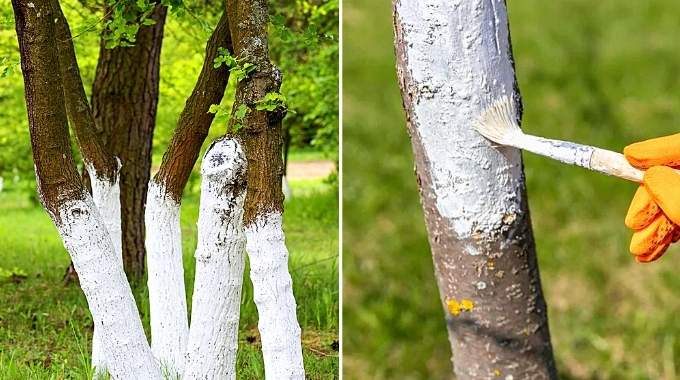
Important note: never use regular interior paint! Products specifically designed for this purpose contain agricultural lime , horticultural latex , or clay , which allows the bark to breathe while protecting it. These products are non-toxic, environmentally friendly, and easy to apply with a brush to the lower part of the trunk (usually up to about 50 centimeters ).
Practical tip : the best time to perform the treatment is late autumn or the very beginning of winter, just before the first major frosts to ensure optimal protection.
A simple, ecological, economical… and exceptionally effective method that will pamper your trees the way they deserve.
Why not try this tip next season?