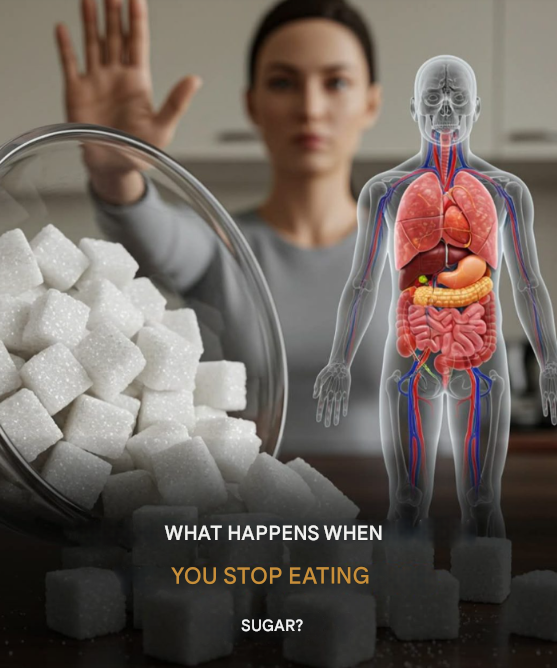
As your body adapts, you may notice temporary symptoms such as:
Headaches,
Fatigue,
Irritability
, Strong sugar cravings
. These are sometimes called sugar withdrawal symptoms. Although unpleasant, they are usually temporary and subside as the body adjusts to a lower sugar intake.
Switching to Fat as an Energy Source
When the body has less glucose available in the form of sugar, it begins to use stored fat as an energy source in a process called ketosis.
In some people, this change leads to:
Improved energy levels.
Improved focus and mental clarity.
However, others may experience short-term symptoms, often called "ketogenic flu." These symptoms may include:
Nausea
Headaches Dizziness Mild fatigue Staying well hydrated and maintaining electrolyte balance can help reduce these problems while your body adapts.
Long-Term Benefits of Reducing Sugar Intake:
Once your body adapts, the long-term benefits can be significant. Reducing your sugar intake can lead to:
Improved insulin sensitivity;
Weight loss, especially around the belly;
Lower risk of chronic disease, including type 2 diabetes and heart disease;
Improved mood and stable energy levels.
Another surprising benefit is that your taste buds begin to change. Over time, naturally sweet foods like fruit can become more filling, while overly processed sweets can seem too sweet.
Practical Strategies for Reducing Sugar Intake
If you're trying to cut back on sugar, these simple strategies can make the process easier.
1. Beware of hidden sugars
Sugar appears on ingredient lists under many names, including:
Sucrose
High fructose corn syrup
Agave
nectar Maltose
Glucose
Carefully reading food labels can help you identify and avoid these hidden sources.
2. Focus on Whole Foods
Base your meals on whole, minimally processed foods such as:
Fruits and vegetables
Whole grains
Lean proteins
Healthy fats
These products provide essential nutrients without added sugar.
3. Try natural sweet alternatives.
If you still crave sweets, consider natural options with a lower glycemic index. For example, lucuma powder offers a subtle sweetness combined with beneficial nutrients.
4. Rethink your drinks
Sweetened drinks are one of the biggest sources of added sugar.
Try replacing them:
Water
Herbal teas
Soda
Water with lemon, berries or mint
5. Create balanced meals
Meals combining protein, healthy fats and complex carbohydrates help you feel full longer and reduce sugar cravings.
6. Practice mindful eating.
Pay attention to your body's hunger signals. Sometimes sugar cravings stem from habit, boredom, or stress, rather than true hunger.
7. Gradually Reduce Sugar.
For many people, a gradual approach works best. Gradually reducing the amount of sugar in coffee, tea, and recipes allows your taste buds to naturally adjust.
How to Deal with Sugar Cravings
: Cravings are one of the biggest challenges when cutting back on sugar. A few smart food choices can help.
High-fiber snacks help stabilize blood sugar levels.
Protein-rich foods can increase satiety and reduce cravings.
Naturally sweet snacks, such as dates or fruit, satisfy sweet cravings without added sugar.
The key is to maintain a stable blood sugar level to avoid cravings.
Final Thoughts:
Reducing sugar in your diet is one of the most effective steps you can take to improve your overall health. While the first few days may involve temporary withdrawal symptoms, your body adapts quickly—and the long-term benefits are worth it.
More energy, a faster metabolism, and fewer cravings for processed sweets – reducing your sugar intake can lead to a healthier and more balanced lifestyle.
Start small, be consistent, and give your body time to adapt. Over time, your taste buds—and your health—will thank you.