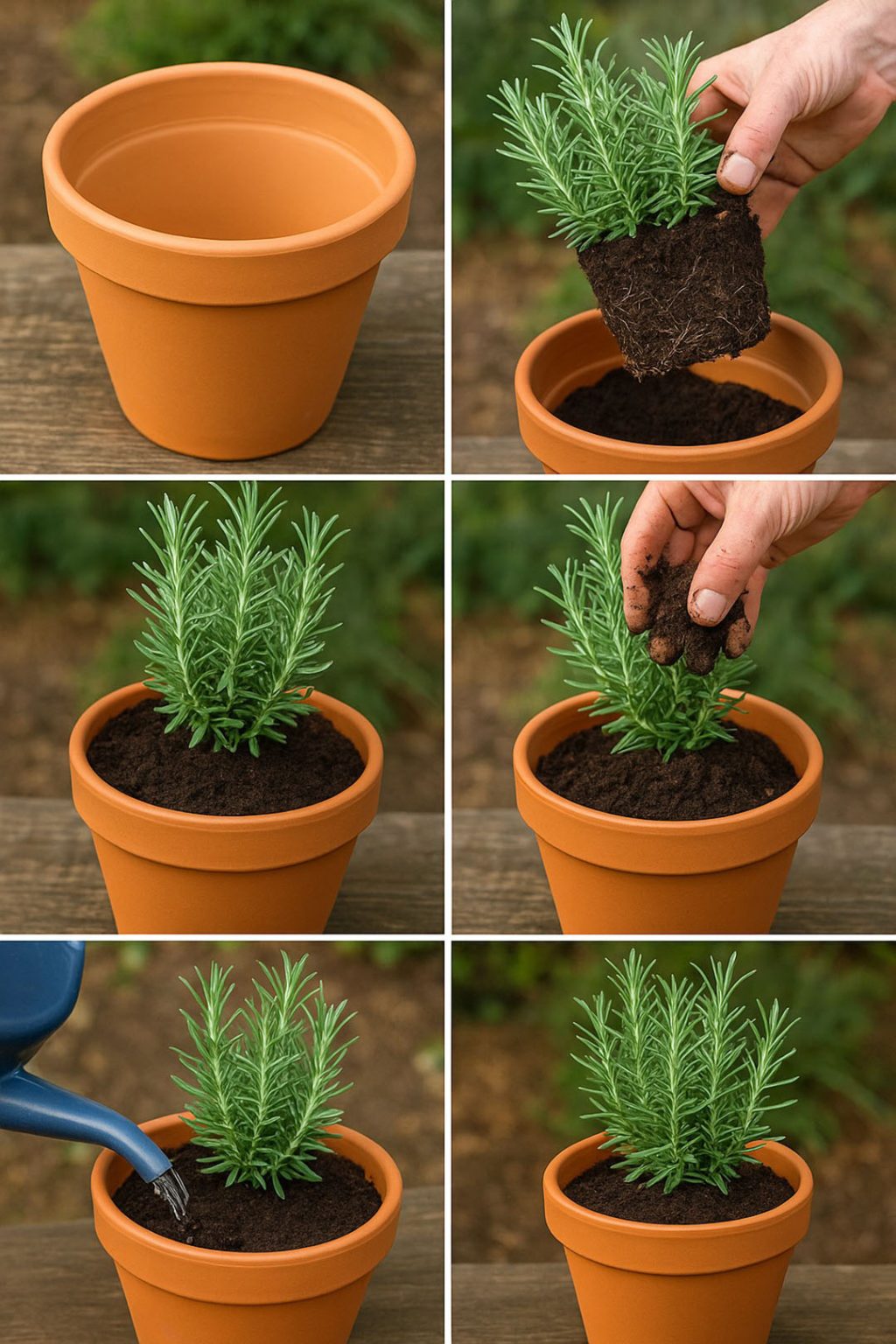
A healthy rosemary plant starts with a well-chosen pot. Forget pots that are too small or purely decorative: the plant needs space for its roots to develop. Choose a pot slightly wider than the root ball, with several drainage holes in the bottom. This is essential to prevent excessive moisture, which is rosemary's real enemy. A breathable material like terracotta is a real asset, as it allows the soil to dry naturally between waterings.
Repot regularly to ensure balanced growth
Over time, the roots fill all available space, inhibiting growth. To prevent this, repotting every two to three years is highly recommended. The best time is in spring, when the plant emerges from dormancy. This process refreshes the soil, aerates the roots, and revitalizes the rosemary, giving it new life after winter.
The key to success is light, well-drained soil.

Watering and feeding: not too much, not too little
Contrary to popular belief, rosemary is not demanding. It prefers slightly dry soil and doesn't need to be watered excessively. Before watering, always check that the top 2-3 cm of soil is completely dry. During the growing season, from April to September, a natural liquid fertilizer once a month is sufficient. A small amount of well-rotted compost, incorporated into the surface, also provides essential nutrients without disturbing the plant's biological balance.
Protect your rosemary during the winter
Although potted rosemary is hardy, it is more sensitive to cold than rosemary grown in the ground. If temperatures drop for extended periods, place the pot in a sheltered spot, against a south-facing wall or in a bright, cool room, such as an unheated conservatory. This precaution protects the roots and allows the plant to regrow vigorously in spring, ensuring a long-lasting harvest of rosemary year-round.
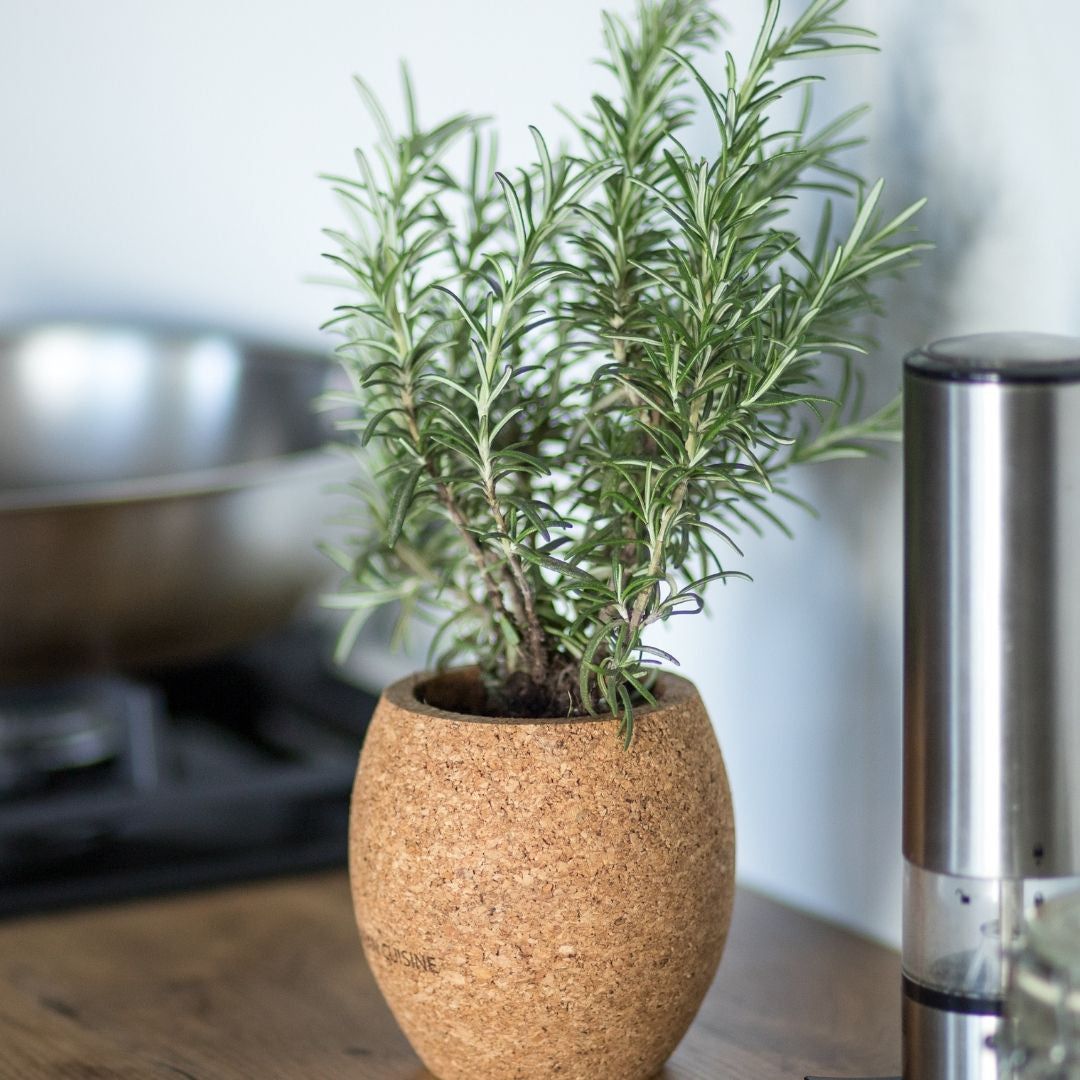
If you follow these simple steps regularly, your potted rosemary can become a faithful companion in the kitchen and on the balcony for many years to come.